
7 Nutrients Women Over 40 Often Hear About, and What the Science Actually Says
By our forties, nutrition advice can start to sound like a crowded conversation.
Take calcium for your bones. Add magnesium for sleep. Eat more protein for muscle. Do not forget vitamin D. Consider omega-3s. Increase fiber. Check your iron.
Each recommendation may contain a piece of truth. The problem begins when that truth becomes a promise.
Turning 40 does not suddenly create a new nutritional rulebook. Nutrient requirements are influenced by age, menstrual status, diet, health conditions, medications, physical activity, and whether we are still menstruating. Perimenopause adds another layer because menstrual patterns may change while body composition and bone health are also beginning to shift. Menopause itself is a specific point reached after 12 consecutive months without menstruation.
So rather than asking which seven supplements every woman over 40 should take, a more useful question is: Which nutrients deserve our attention, what do they actually do, and where does the evidence stop?
1. Protein: Important for Muscle, but More Is Not Automatically Better
Protein often becomes part of the midlife conversation because maintaining skeletal muscle becomes increasingly important with age.
Research following women through the menopause transition has documented changes in body composition, including losses in lean mass around this stage of life. Resistance exercise remains one of the most effective strategies for preserving strength and muscle, while adequate dietary protein provides the amino acids required to maintain and rebuild that tissue.
The established Recommended Dietary Allowance for healthy adults is 0.8 grams of protein per kilogram of body weight per day. Some research in older adults suggests that higher intakes may support preservation of lean mass under certain circumstances, particularly alongside resistance training, but there is no single menopause-specific protein target that applies to every woman.
The practical takeaway is less dramatic than social media sometimes suggests: protein matters, but so do exercise, overall calorie intake, sleep, and dietary quality.
Useful food sources include fish, eggs, yogurt, poultry, beans, lentils, tofu, tempeh, nuts, and seeds.

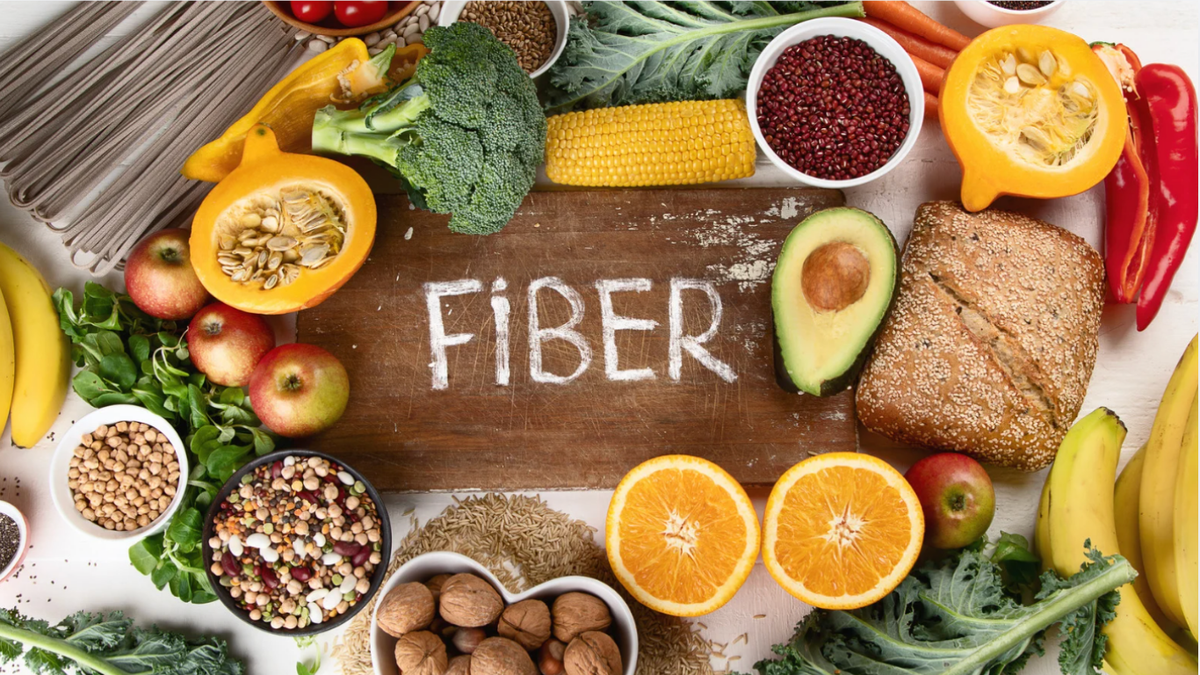
2. Fiber: Less Glamorous, but Supported by Stronger Evidence Than Many Trendy Supplements
Fiber is sometimes marketed as a way to “balance estrogen” or “reset metabolism.” Those claims go beyond what current evidence can establish.
What we know more confidently is that dietary fiber contributes to bowel health, fullness, glucose regulation, and cardiovascular health. Reviews of the broader evidence consistently link adequate fiber intake with better cardiometabolic outcomes.
That becomes relevant in midlife because cardiovascular and metabolic health deserve increasing attention as women age.
Fiber also feeds certain gut microbes, which produce metabolites such as short-chain fatty acids. Research into the relationship between the gut microbiome and menopause is growing, but we should be cautious about turning this emerging science into claims that a specific fiber can “fix menopausal hormones.”
For most women, the stronger evidence supports something much simpler: regularly eating vegetables, fruit, legumes, whole grains, nuts, and seeds.

3. Calcium: Bone Health Matters, but a Supplement Is Not Always the Answer
Calcium deserves its reputation as a bone nutrient. Approximately 99% of the body's calcium is stored in bones and teeth, and calcium is also required for muscle contraction, nerve signaling, and other physiological functions.
Its relevance increases around menopause because declining estrogen is associated with accelerated bone loss.
According to the NIH Office of Dietary Supplements, the calcium RDA is 1,000 mg per day for women ages 19 to 50 and increases to 1,200 mg per day for women ages 51 to 70.
But 1,200 mg is a total daily intake target, not an instruction to take a 1,200 mg supplement.
Foods such as dairy products, calcium-set tofu, fortified plant beverages, canned fish with edible bones, and some leafy vegetables can contribute substantially.
Supplemental calcium can be useful when dietary intake is inadequate, but more calcium is not necessarily better. Individual needs, kidney stone history, medications, and total dietary intake matter.

4. Vitamin D: Essential for Bone Biology, Not a Universal Solution for Midlife Symptoms
Vitamin D and calcium are frequently mentioned together for good reason. Vitamin D helps the intestine absorb calcium and supports normal bone mineralization.
For adults ages 19 through 70, the current RDA is 600 IU, or 15 micrograms, per day. Requirements increase after age 70.
Where the conversation becomes less scientific is when vitamin D is presented as a broad answer for weight gain, fatigue, mood changes, or other nonspecific midlife symptoms.
For example, reviews summarized by the NIH have not shown that vitamin D supplementation by itself promotes meaningful weight loss or fat loss.
Vitamin D status can certainly be inadequate, particularly in people with limited sun exposure, certain gastrointestinal conditions, darker skin pigmentation, or other risk factors. But supplementation should be considered in the context of actual intake, individual risk, and healthcare guidance rather than the assumption that every perimenopausal symptom reflects vitamin D deficiency.
5. Magnesium: Biologically Important, but the Sleep Story Is More Complicated
Magnesium has become one of the most visible “midlife minerals,” particularly in conversations about sleep, anxiety, stress, and muscle relaxation.
Its established biological roles are extensive. Magnesium participates in hundreds of enzyme systems involved in nerve and muscle function, glucose regulation, blood pressure, protein synthesis, and bone biology. Adult women ages 31 and older have an RDA of approximately 320 mg per day.
But biological importance does not automatically mean magnesium supplements reliably improve every condition associated with magnesium.
A systematic review examining magnesium and sleep found associations between magnesium status and sleep outcomes, but randomized trial evidence was inconsistent. Another review of oral magnesium for insomnia in older adults found only three small randomized trials totaling 151 participants, making the evidence too limited for strong conclusions.
Study: https://pubmed.ncbi.nlm.nih.gov/35184264/
So magnesium is an important nutrient. Calling it a proven solution for perimenopausal insomnia is a different claim, and one the evidence does not yet justify.
Food sources include nuts, seeds, legumes, whole grains, and leafy greens.

6. Omega-3 Fatty Acids: Good Nutrition, but Not a Proven Menopause Remedy
Omega-3 fatty acids include ALA from plant foods and EPA and DHA found mainly in seafood and marine sources.
They are involved in cell membrane structure and multiple physiological signaling pathways. Omega-3s have also been studied extensively in cardiovascular health, including their ability to lower triglyceride levels at appropriate therapeutic doses.
What about menopause symptoms?
The results are far less certain.
A systematic review of omega-3 supplementation for vasomotor symptoms found possible improvement in night sweats but no clear benefit for hot flashes or sleep quality. A later review likewise described mixed findings across studies.
Study: https://pubmed.ncbi.nlm.nih.gov/30056356/
That means fatty fish, walnuts, chia seeds, flaxseeds, and other omega-3-containing foods can fit naturally into a nutrient-dense diet, without needing to position omega-3s as a specific answer to menopause.
 7. Iron: One Nutrient Where “More After 40” Can Be the Wrong Message
Iron makes this list precisely because its story is different.
Iron is necessary for hemoglobin, which carries oxygen in red blood cells. Before menopause, menstrual blood loss contributes to higher iron requirements in women. The RDA is 18 mg per day for women ages 19 to 50, compared with 8 mg per day from age 51 onward.
Perimenopause complicates that timeline.
Some women develop heavier or prolonged bleeding during the menopause transition, and heavy menstrual bleeding is an important contributor to iron deficiency and iron-deficiency anemia.
Study: https://pubmed.ncbi.nlm.nih.gov/36706856/
But once menstrual blood loss ends, iron needs generally fall. This is why automatically adding iron to a midlife supplement routine may not be appropriate.
Persistent fatigue, weakness, shortness of breath, or heavy menstrual bleeding deserves medical assessment rather than self-diagnosis. Iron status can be evaluated with appropriate blood testing, and unusually heavy or abnormal bleeding should itself be investigated.

What Does Science Actually Tell Us?
Perhaps the most useful lesson is that midlife nutrition is not about discovering one missing nutrient.
Protein cannot replace resistance exercise. Magnesium cannot explain every poor night's sleep. Vitamin D is important without being a weight-loss nutrient. Calcium supports bone without making high-dose supplementation automatically beneficial. Omega-3s can be part of a healthy dietary pattern without being a proven answer for hot flashes.
And iron reminds us that nutritional needs can move in opposite directions as reproductive status changes.
The broader evidence favors a dietary pattern built around nutrient-dense foods rather than collecting individual nutrients one capsule at a time. Individual supplementation may still have a role when intake is inadequate, deficiency is identified, dietary restrictions apply, or a healthcare professional recommends it.
After 40, our nutritional needs deserve more attention, but also more nuance.
We do not need to chase every nutrient headline. We need to understand what each nutrient can realistically support, what the evidence has not yet proven, and where our own health history changes the equation.
Read more
A carton of soy milk can carry two completely different reputations. In one conversation, soy is described as a natural source of “estrogen” that women should seek out during menopause. In another,...

The Menopause Society reports that 40% to 60% of midlife women describe cognitive symptoms during the menopause transition, including forgetfulness, difficulty concentrating, distractibility, and t...
Leave a comment
All comments are moderated before being published.
This site is protected by hCaptcha and the hCaptcha Privacy Policy and Terms of Service apply.