
Phytoestrogens Explained: Can Soy, Flax, and Other Plant Compounds Really Act Like Estrogen?
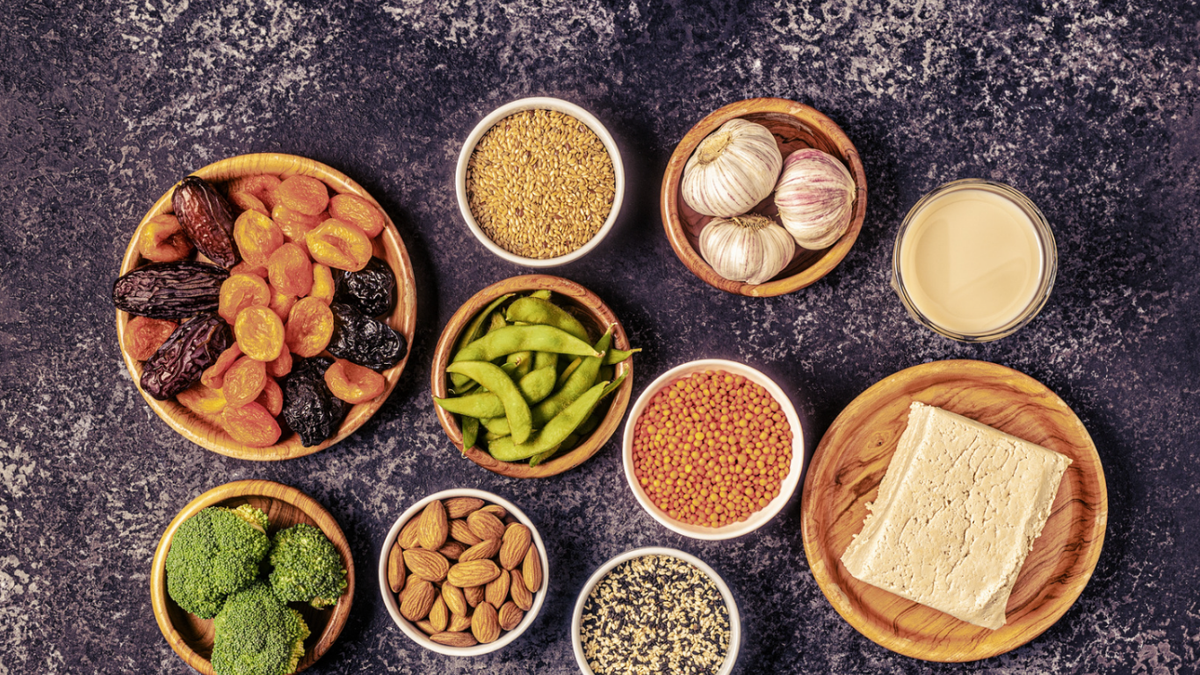
A carton of soy milk can carry two completely different reputations.
In one conversation, soy is described as a natural source of “estrogen” that women should seek out during menopause. In another, we are warned that the same compounds might be too estrogenic.
Both interpretations begin with a real biological fact, then take it further than the evidence allows.
Soy, flaxseed, and several other plant foods contain compounds known as phytoestrogens. Their chemical structures resemble human estrogen closely enough that some can interact with estrogen receptors in the body. But phytoestrogens are not human estrogen, and eating tofu is not physiologically equivalent to taking estrogen.
The Menopause Society defines phytoestrogens as plant compounds with structures similar to estrogen that can produce weak estrogen-like biological activity.
Understanding that word “weak” is where the story becomes much more interesting.
 What Are Phytoestrogens?
Phytoestrogens are a diverse group of naturally occurring plant compounds. The three categories most commonly discussed are isoflavones, lignans, and coumestans.
Isoflavones have received the most menopause research. Soybeans are particularly rich in the isoflavones genistein, daidzein, and glycitein. Tofu, tempeh, edamame, miso, and soy milk therefore contain varying amounts of these compounds.
Lignans occur across many plant foods, with flaxseed being an especially concentrated dietary source. Smaller amounts occur in seeds, whole grains, legumes, fruits, and vegetables. Coumestans are found in foods such as clover and some sprouts, but they have received much less attention in human menopause research.
What unites these compounds is not that they become estrogen. Rather, their molecular shape allows some of them, or metabolites produced from them, to interact with parts of the body's estrogen signaling system.
Do Phytoestrogens Actually Act Like Estrogen?
Yes, but only in a qualified sense.
Estrogen signals partly through proteins called estrogen receptors. Two major types are estrogen receptor alpha, or ERα, and estrogen receptor beta, or ERβ.
Laboratory research shows that soy isoflavones such as genistein and daidzein can bind to these receptors and activate estrogen-related signaling, although much less potently than estradiol, the body's principal estrogen during the reproductive years. Their activity also differs between receptor types. Some phytoestrogens show greater preference for ERβ.
This matters because ERα and ERβ are not distributed identically throughout the body and do not necessarily produce the same biological response.
As a result, describing phytoestrogens simply as “natural estrogen” is misleading.
Depending on the compound, concentration, tissue, receptor environment, and amount of circulating estrogen already present, a phytoestrogen may produce a weak estrogen-like signal, have little effect, or potentially compete with stronger estrogen signaling.
That complexity is one reason studies do not produce identical results.
 Soy Isoflavones: The Most Studied Phytoestrogens
Most conversations about phytoestrogens in menopause eventually arrive at soy.
Soy is unusual because it provides meaningful amounts of isoflavones alongside protein, unsaturated fats, fiber, minerals, and other food components.
This also makes research complicated. A study of tofu or soy foods is not necessarily studying exactly the same thing as a capsule containing isolated isoflavones.
The NIH National Center for Complementary and Integrative Health notes that soy isoflavone supplements or soy protein may produce a small reduction in the frequency or severity of hot flashes, but research findings remain inconsistent.
Recent research continues to reflect this uncertainty.
A 2024 systematic review and meta-analysis of randomized controlled trials concluded that soy isoflavones did not significantly improve overall menopausal symptom scores or quality of life, although an effect on depression scores was observed. The authors also identified a high risk of conflict of interest among included studies.
A separate 2025 meta-analysis reported small improvements in some overall symptom measures but found no significant benefit for hot flashes, excessive sweating, insomnia, or overall vasomotor symptoms.
These mixed findings help explain why The Menopause Society's 2023 evidence review did not recommend soy foods, soy extracts, or equol specifically as interventions for vasomotor symptoms.
That does not mean soy is an unhealthy food. It means the evidence does not support promising that soy will reliably stop hot flashes.

Why Does Soy Seem to Work Differently for Different Women?
One intriguing explanation involves the gut microbiome.
One of soy's main isoflavones, daidzein, can be converted by certain intestinal bacteria into a metabolite called equol. Equol has estrogen receptor activity, particularly involving ERβ, and has therefore become an active area of research.
Not everyone has the gut microbial community needed to produce equol efficiently.
Researchers have proposed that differences in equol production could partly explain why two women eating similar amounts of soy might experience different biological effects. But equol status is only one possible factor. Diet, genetics, menopause stage, baseline symptom severity, dose, and the form of soy being studied may also contribute.
This is a useful example of why nutrition rarely behaves like a simple medication equation.
What About Flaxseed?
Flaxseed enters the phytoestrogen conversation for a different reason.
Instead of being rich in soy-type isoflavones, flax contains high levels of lignan precursors. Gut bacteria convert these plant lignans into compounds known as enterolignans, including enterodiol and enterolactone, which can interact weakly with estrogen-related pathways.
That biology has led to interest in flaxseed for menopause symptoms.
Clinical evidence, however, has not consistently supported the enthusiasm.
NCCIH summarizes randomized studies in which flaxseed performed no better than placebo for hot flashes. In one trial involving 188 postmenopausal women, six weeks of flaxseed did not significantly reduce hot flashes compared with placebo.
This does not remove flaxseed from a healthy diet.
Flax also provides fiber, alpha-linolenic acid, and other plant compounds, so its nutritional value should not be judged solely by whether its lignans change menopause symptoms.
 Are Other Plant Foods Sources of Phytoestrogens?
Yes, and this is where the conversation often becomes unnecessarily supplement-focused.
Phytoestrogens occur naturally across the plant kingdom. Legumes, whole grains, seeds, nuts, fruits, vegetables, and some sprouts can contribute different phytoestrogen compounds in varying amounts.
But their concentrations differ enormously.
Eating lentils, flaxseed, and tofu therefore does not deliver one standardized “dose of estrogen.” It provides a mixture of nutrients and plant compounds that the body digests, metabolizes, and transforms.
This distinction between food and isolated extract becomes especially important when considering safety.

So, Should We Think of Phytoestrogens as “Plant Estrogen”?
Probably not.
A more scientifically accurate description is that phytoestrogens are plant compounds capable of interacting weakly and selectively with estrogen signaling pathways.
That may sound less memorable than “natural estrogen,” but it better reflects what the body is actually doing.
Soy isoflavones can interact with estrogen receptors. Flax lignans can be transformed by gut bacteria into biologically active metabolites. Some women may experience small benefits from certain phytoestrogen-rich foods or compounds, while others notice none.
What the research does not support is the idea that phytoestrogen-rich foods simply replace declining estrogen during perimenopause.
We can appreciate soy, flaxseed, legumes, whole grains, nuts, and seeds as nutrient-rich foods without requiring them to behave like hormone therapy.
That distinction allows us to hold two ideas at once: plant compounds can have meaningful biological activity, and meaningful biological activity is not the same as being a human hormone.
Read more
Magnesium has become one of the most talked-about minerals in midlife wellness. Somewhere between the 3 a.m. wake-up, the shorter fuse, and the bottle of magnesium glycinate on the nightstand, a si...
By our forties, nutrition advice can start to sound like a crowded conversation. Take calcium for your bones. Add magnesium for sleep. Eat more protein for muscle. Do not forget vitamin D. Consider...
Leave a comment
All comments are moderated before being published.
This site is protected by hCaptcha and the hCaptcha Privacy Policy and Terms of Service apply.